

Drupal Content Governance: Enterprise Content Management and Workflows

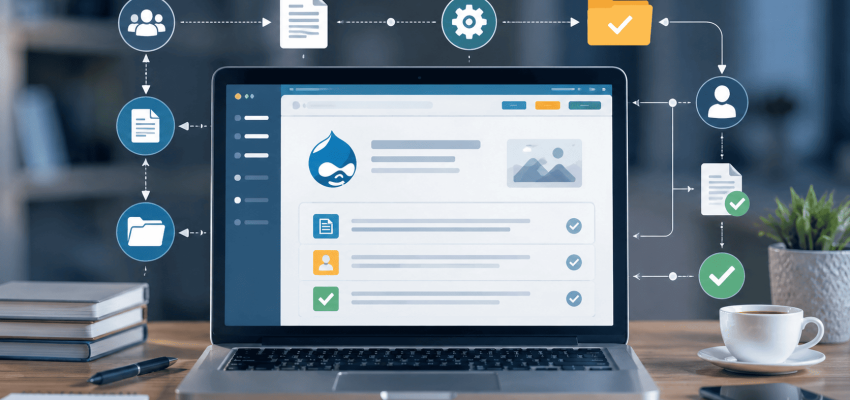
Successful content management for enterprise websites is not just about creating content; it also requires well-defined processes, permissions, and approval mechanisms. Drupal Content Governance enables organizations to manage every stage of the content lifecycle—from creation to publication—in a controlled and sustainable way.
With Drupal’s advanced role management, workflow, and content moderation capabilities, organizations can improve content quality, security, and operational efficiency across large-scale web projects. In this guide, we explore the core components of Drupal Content Governance and the key benefits it provides for enterprise content management processes.
What Is Drupal Content Governance? Fundamentals of Enterprise Content Management
Drupal Content Governance refers to the structured management of content planning, creation, editing, approval, publication, and maintenance according to defined rules and organizational standards. For large enterprises, keeping content processes under control is essential for maintaining brand consistency and improving operational efficiency.
With Drupal’s robust content management capabilities, organizations can define workflows for different teams, configure user permissions, and ensure that content passes through the appropriate review and approval stages before publication.
The core processes managed through Drupal Content Governance include:
- Content creation and planning: Defining who creates content and the standards it must follow.
- Role and permission management: Configuring access based on user roles such as authors, editors, and administrators.
- Approval and publishing workflows: Ensuring content goes through review, revision, and approval before it is published.
- Content quality and consistency: Maintaining compliance with organizational content standards across all published materials.
- Content lifecycle management: Managing updates, archiving, and content retirement in a structured and consistent manner.
A well-implemented Drupal Content Governance strategy helps organizations build more secure, scalable, and sustainable digital platforms.
How Are Content Creation, Editing, and Publishing Workflows Managed in Drupal?
Content management in Drupal goes far beyond simply creating and publishing pages. The platform enables organizations to centrally manage the entire content lifecycle—from creation and editing to review and publication—in a controlled and structured way. This allows multiple teams to collaborate within the same system while maintaining content quality and workflow consistency.
Content creation, editing, and publishing workflows in Drupal typically include the following steps:
- Content type configuration: Different content types, such as news, blogs, events, or products, are configured according to business requirements.
- Content creation and editing: Authorized users create, update, and revise content as needed.
- Review and approval workflow: Editors or administrators review submitted content and approve it before publication.
- Publishing and maintenance: Approved content is published on the scheduled date and can later be updated, archived, or retired when necessary.
This structured approach enables organizations to manage content processes more efficiently, reduce the risk of errors, and maintain a consistent publishing strategy across all digital channels.
Optimizing Approval Workflows with Drupal Workflow and Content Moderation
For enterprise websites, requiring content to pass through defined review stages before publication significantly improves both quality and security. Drupal’s Workflow and Content Moderation modules simplify content lifecycle management while creating structured and controlled collaboration across teams.
With the Workflow module, organizations can define custom content workflows based on their business requirements. A piece of content can begin as a draft, move to editorial review, undergo revisions, and finally be approved by authorized users before publication. This approach is particularly valuable for enterprise projects where multiple departments contribute to content creation, helping reduce errors and maintain consistency.
The Content Moderation module enables teams to manage content through different moderation states, such as Draft, In Review, Approved, and Published. These statuses provide clear visibility into where each piece of content is in the publishing process. In addition, Drupal maintains a revision history, allowing teams to track changes and restore previous versions whenever necessary.
A well-designed Workflow and Content Moderation strategy makes content management more transparent, secure, and efficient while ensuring that enterprise publishing standards are consistently maintained.
Secure Content Management with Drupal User Roles and Permissions
Drupal’s user roles and permissions system forms the foundation of secure content management. Allowing users to perform only the actions required for their responsibilities enhances content security while reducing the risk of accidental changes. In enterprise environments, where multiple teams collaborate on the same platform, a well-defined permission structure is essential.
Key best practices for an effective role and permission strategy include:
- Define user roles clearly: Create roles such as Author, Editor, Content Manager, and System Administrator.
- Follow the principle of least privilege: Grant users only the permissions necessary to perform their assigned tasks.
- Restrict publishing permissions: Ensure that only authorized users can publish content.
- Review permissions regularly: Periodically audit user roles and access rights to keep them up to date.
- Monitor revisions and activity logs: Track content changes and user actions to support accountability and auditing.
A properly configured user roles and permissions system makes content management more secure, controlled, and sustainable while ensuring that enterprise workflows operate efficiently and consistently.
Benefits of Drupal Content Governance for Large-Scale Websites
As the volume of content, number of users, and complexity of management processes increase, centralized and controlled content management becomes essential for large-scale websites.
Drupal Content Governance enables multiple teams to collaborate efficiently on a single platform while maintaining content quality and streamlining operational workflows.
Key benefits of Drupal Content Governance for enterprise websites include:
- Centralized content management: All content can be managed from a single platform based on consistent organizational standards.
- Faster and more controlled workflows: Content creation, review, and publishing processes follow predefined approval workflows.
- Enhanced security and access control: Role-based permissions ensure that users can perform only the actions authorized for their roles.
- Consistent brand and content experience: Content produced by different departments is published according to the same quality standards, helping maintain a consistent brand identity.
With these advantages, Drupal Content Governance helps organizations manage content more efficiently, minimize errors, and build a scalable and sustainable digital content management framework.
| Practice | Benefit |
|---|---|
| Establishing content standards | Ensures all content follows consistent language, formatting, and quality guidelines. |
| Using Workflow and Content Moderation | Ensures content goes through structured review and approval processes, reducing errors before publication. |
| Role-based permissions | Improves security by allowing users to perform only the actions appropriate to their responsibilities. |
| Regular content updates | Keeps content accurate, relevant, and up to date by replacing outdated information. |
| Revision tracking | Maintains a history of content changes and enables restoration of previous versions when needed. |
| Centralized content management | Promotes consistency by enabling multiple teams to work within shared standards on a single platform. |
Best Practices and Future Trends in Drupal Content Governance
As digital content continues to grow, effective content management depends not only on creating content but also on managing it through well-defined processes. With powerful features such as user roles, workflows, and content moderation, Drupal Content Governance helps organizations build more secure, consistent, and efficient content operations.
Looking ahead, advancements in AI-powered content management, automated workflows, and advanced analytics will make Content Governance more intelligent and data-driven. Thanks to Drupal’s flexible and scalable architecture, organizations can easily adapt to evolving business requirements while maintaining a strong foundation for sustainable, long-term enterprise content management.