

Drupal Website Maintenance and Support: Why Should Enterprises Work with a Specialized Agency?

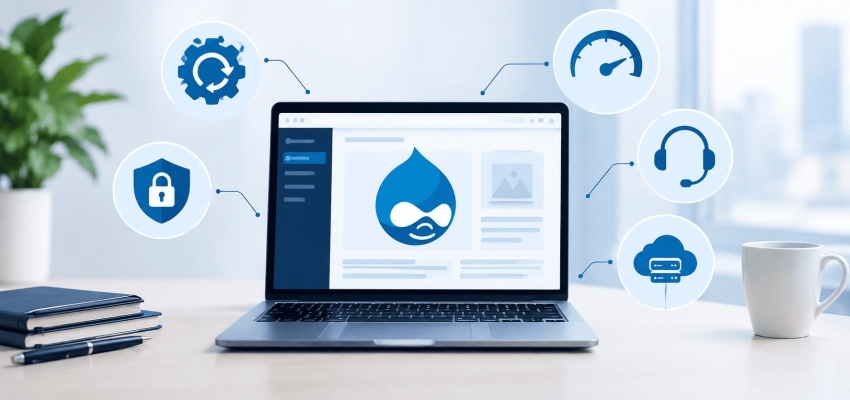
Corporate websites play a critical role in managing companies’ digital assets, reaching customers, and ensuring uninterrupted business operations. However, launching a Drupal website alone is not enough to achieve long-term success. Security vulnerabilities must be addressed, software updates must be applied, performance must be maintained, and technical issues must be resolved quickly. Without regular maintenance, a website may become slow, lose functionality, or face security risks. Drupal website maintenance and support help reduce these risks while ensuring that corporate websites operate sustainably, securely, and efficiently. Working with a specialized Drupal agency ensures that technical processes are managed systematically and allows in-house teams to focus on core business objectives.
What Does Drupal Website Maintenance Include?
Drupal website maintenance encompasses the technical activities required to preserve a website’s existing functionality and prepare it for future needs. This process involves more than software updates; also includes regularly reviewing the infrastructure, content management system, integrations, and user experience.
Corporate Drupal maintenance services typically include the following activities:
- Core and module updates: Keeping Drupal core and contributed modules up to date, compatible, and on supported versions.
- Security checks: Monitoring known security vulnerabilities, applying necessary patches, and reviewing access permissions.
- Backup and recovery: Regularly backing up databases and files and testing recovery procedures when necessary.
- Performance monitoring: Evaluating page load times, caching mechanisms, and server resources.
- Error tracking: Identifying issues affecting forms, search functionality, API connections, and third-party integrations.
- Technical improvements: Enhancing usability, accessibility, and management processes in line with business needs.
The scope of maintenance activities should be determined by the website’s size, traffic volume, modules in use, and the critical importance of its business processes. For example, the needs of a corporate website that provides multilingual content and integrates with multiple systems differ from those of a small website consisting of basic pages.
Why Are Drupal Updates and Security Management Important?
Drupal is known for its strong security features and regular security advisories. However, no CMS can automatically protect against every risk if it is not properly configured and kept up to date. Outdated modules, incorrect access permissions, and unupdated dependencies can lead to security issues, particularly on corporate websites.
When planning Drupal updates, simply installing a new version is not enough. The impact of an update on the existing theme, custom modules, integrations, and functionality must also be assessed. For this reason, it is important for enterprise projects to apply updates in a test environment first, verify critical functionality, and then deploy the changes to the live environment.
The following steps should be prioritized as part of security management:
- Regularly monitor security advisories for Drupal core and modules.
- Review unused modules and unnecessary user permissions.
- Create backups and prepare a rollback plan before applying updates.
- Use strong authentication methods and appropriate access controls for administrator accounts.
- After updates, test forms, user login, search functionality, and critical integrations.
An up-to-date Drupal infrastructure helps manage security risks. However, maintaining security over time depends on combining monitoring, proper configuration, regular testing, and incident response.
Improve Website Speed with Drupal Performance Optimization
Website performance is an important factor that affects both user experience and organic traffic from search engines. Slow-loading pages, complex navigation structures, and delayed interactions can cause visitors to leave a website. Particularly on high-traffic corporate websites, performance issues can negatively affect customer acquisition and the usability of digital services.
Drupal performance optimization requires identifying the source of a problem and implementing technical improvements in the right areas. The same solution is not suitable for every website. Database queries, server resources, third-party services, and caching configurations must be evaluated together.
| Optimization Area | Possible Improvements | Expected Benefit |
| Caching | Improving Drupal caching and, where appropriate, CDN configuration | Faster responses to repeated requests |
| Database | Examining slow queries and unnecessary operations | More efficient data access |
| Images and Files | Serving images in appropriate sizes and formats | Reduced page load |
| Code and Modules | Evaluating unnecessary modules and JavaScript and CSS resources | More efficient page loading |
| Server Infrastructure | Monitoring resource usage, response times, and traffic levels | More stable operation during periods of heavy traffic |
The impact of improvements should be monitored using measurement tools. Tools such as Google PageSpeed Insights and Lighthouse can provide data about page performance and Core Web Vitals metrics. However, rather than relying on a single test result, real-user data, server logs, and measurements from different page types should be evaluated together.
Technical Support and Troubleshooting for Enterprise Drupal Websites
On corporate websites, a technical issue does not simply mean that a particular page stops working. Problems such as failed form submissions, users being unable to log in, incorrectly displayed search results, or interruptions to CRM and ERP integrations can directly affect business operations. For this reason, Drupal technical support should not be limited to responding after a problem occurs; it should also aim to identify potential issues early.
A specialized Drupal support team examines application logs, server records, database operations, and integration responses to identify the source of a problem.
The team then tests whether the solution affects other website components. This makes it possible to develop solutions that address the root cause rather than relying on temporary fixes.
The scope of technical support services and response times should be defined in advance. Companies that provide critical digital services should clearly specify service hours, priority levels, response targets, and emergency procedures in their support agreements. Documenting all changes also helps ensure that future maintenance activities are carried out in a more controlled manner.
What Should You Consider When Choosing a Drupal Maintenance Agency?
Choosing a Drupal maintenance agency directly affects the long-term security, performance, and extensibility of a website. The agency must not only be capable of resolving existing issues but also understand the complexity of enterprise systems and provide a sustainable technical roadmap.
Follow these five steps to evaluate the right agency:
- Evaluate Drupal expertise. Review the agency’s experience with Drupal core, contributed modules, custom development, and version upgrade processes.
- Clarify the maintenance scope. Find out whether updates, security monitoring, backups, performance monitoring, and technical support are included in the contract.
- Compare support and response conditions. Evaluate response times, emergency management, service hours, and the methods used to prioritize issues.
- Ask about testing and deployment processes. Find out whether the agency uses a test environment, how it validates changes, and whether a rollback plan is available if problems arise.
- Review its long-term development approach. Determine whether the agency focuses solely on maintenance or also provides a roadmap for performance, scalability, and new integrations.
When comparing proposals, do not focus solely on the monthly fee. Factors such as service scope, expertise, response conditions, and technical documentation determine the overall value of the service. The lowest-priced option may lead to higher long-term costs if it does not cover the resolution of critical issues.
Ensure Business Continuity with Professional Drupal Maintenance and Support
Drupal website maintenance and support are important investments in ensuring that corporate digital infrastructure operates securely, efficiently, and sustainably. Regular updates, security checks, performance optimization, and planned technical support help reduce the impact of unexpected disruptions and enable websites to adapt to changing business needs.
At Drupart, we understand the importance of managing corporate website maintenance, security, and technical support processes systematically. If you need updates, performance improvements, integrations, or ongoing technical support for your Drupal infrastructure, you can evaluate your existing system and business objectives to develop solutions tailored to your needs. Working with a specialized team for your Drupal maintenance and support needs is an important step toward supporting your website’s long-term success.