

How to Compare Corporate Website Proposals? 6 Factors That Determine the Price
Imagine you have three corporate website proposals from three different web agencies. All three respond to the same brief, yet the quoted prices differ not by a few percentage points, but by several multiples.

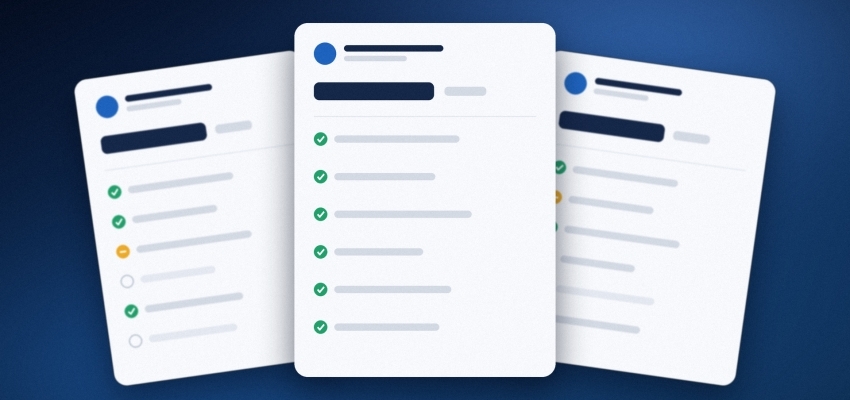
Imagine that you have three corporate website proposals from three different web agencies. All three are responding to the same brief, yet there may be a difference of several times rather than just a few percentage points between the quoted prices. In such a situation, your first instinct may be to choose the lowest-priced proposal or consider the middle-priced option a safer choice. However, both approaches can lead to unexpected costs at the end of the project.
This is because the difference between corporate website prices is not determined solely by the total amount stated in the proposal. The real difference often lies in the scope, integrations, technical infrastructure, maintenance, security, accessibility, and delivery conditions that are not clearly specified in the proposal. In this article, we will examine the 6 key factors that determine corporate website costs, the costs frequently overlooked in proposals, and the 6 critical questions you should ask a web agency. We will also provide a comparison table that you can use to evaluate proposals based on the same criteria.
Why Are There Large Price Differences Between Corporate Website Proposals?
"Corporate website" does not refer to a specific scope by itself. A five-page corporate website and a high-traffic corporate web platform with multilingual support, advanced content models, and CRM and ERP integrations can both be offered under the same general definition. Therefore, it should not be expected that two proposals will have the same price.
Web agencies may also approach the project scope, team structure, technology and CMS infrastructure, design methodology, and post-launch support model differently. For this reason, when comparing corporate website proposals, you should look beyond the total price and examine which services are included in exchange for that price.
The following 6 factors will help you understand the main reasons behind differences in corporate website costs.
6 Factors That Determine Corporate Website Costs
Scope, Number of Pages, and Multilingual Support
One of the first factors determining corporate website development costs is the scope of the project. In addition to the number of pages, content types, different page templates, custom functionalities, and the number of supported languages directly affect the overall workload.
Especially for multilingual corporate websites, each additional language involves more than simply translating content. Language structures, content management, SEO settings, URL structures, and user experience must also be taken into consideration. Therefore, instead of stating only a figure such as "100 pages," the proposal should clearly specify how many different templates and languages will be supported.
Design Depth: Custom Design or Ready-Made Template
Using a ready-made theme or template can reduce development time and initial costs. However, ready-made structures may not always fully align with the brand identity, user needs, and specific business processes of an organization.
Custom design projects, on the other hand, involve user research, information architecture, wireframing, UI design, prototyping, and revision processes. Therefore, the proposal should clearly state whether the project involves custom design, a ready-made theme, or a combination of both.
CMS and Technology Infrastructure
The content management system and technical infrastructure used can affect both the initial project cost and the long-term operating expenses of the website. When selecting a CMS, organizations should consider not only their current needs but also future content volume, number of users, security requirements, and integration needs.
Scalability, advanced permissions, content management, and security become particularly important in enterprise projects. In our article on how to build a corporate website, you can explore the stages of the corporate web development process from start to finish.
Integrations: CRM, ERP, Payment Systems, and Single Sign-On
Integrations with CRM, ERP, payment systems, human resources applications, search services, or third-party APIs can significantly expand the scope of a project. Each integration requires analysis, development, security checks, and testing processes to be properly planned.
For example, if users need to access different systems within the organization using a single account, SSO integration should be addressed separately. Our Drupal SSO guide explains in greater detail how single sign-on works on corporate websites. The integrations to be used and their scope should be clearly specified one by one in the proposal.
Accessibility, Security, and Performance Standards
Accessibility, security, and performance may be presented as part of "standard development" in many proposals. However, each of these areas requires dedicated planning, development, and testing processes.
For example, WCAG compliance should be checked not only during the design phase but also throughout development and testing. Similarly, security checks, performance optimization, and technical tests should be clearly defined, including how they will be validated at the end of the project. Our WCAG 2.2 checklist and Drupal security checklist can help identify the areas you should ask about when evaluating a proposal.
Content Migration, Post-Launch Maintenance, and Training
Launching a new corporate website involves more than design and software development costs. Migrating content from the existing website, preparing URL redirects, transferring media files, and training the content team to use the new CMS may also need to be included in the project scope.
In addition, it should be determined in advance who will manage security updates, technical maintenance, and potential issues after launch. These three areas can directly affect the long-term total cost of the website, independently of the initial project budget.
How Can You Compare Website Proposals Using the Same Criteria?
The first step in properly comparing corporate website proposals is to send the same scope document and technical requirements to all agencies. Comparing only the total prices of proposals prepared based on different scopes will not provide a reliable result.
As a second step, classify every service included in the proposals as "included," "excluded," or "optional." This makes it easier to see which services each agency is actually offering.
For example, an agency's proposal may be less expensive than others, but content migration, accessibility testing, maintenance, or integrations may be excluded from the scope. In this case, a lower price does not necessarily mean a more advantageous proposal; it may simply represent a narrower project scope.
Finally, bring all proposals to the same scope level and compare the total costs accordingly. It is more accurate to evaluate the total cost of ownership by also considering long-term maintenance, licensing, hosting, security, and development expenses.
Hidden Costs and Missing Items Frequently Overlooked in Proposals
While some services are clearly priced in corporate website proposals, certain operational items may be excluded from the scope. Therefore, it is important to review not only the main items of the proposal but also the services that are excluded.
- Content preparation and data migration: It should be clearly stated who will transfer text, images, documents, and content from the existing website to the new system.
- License and plugin costs: Check whether third-party software, services, or modules used in the project have licensing or annual renewal costs.
- Hosting, SSL, and backups: Clarify whether hosting, SSL certificates, server management, and regular backup services are included in the project.
- Security updates: It should be specified who will handle security updates for the CMS, modules, and other components after launch and how frequently these updates will be performed.
- Revision limits: Find out how many rounds of revisions are included during the design and development process. There can be a significant difference in workload between "unlimited revisions" and "two rounds of revisions."
- Training and documentation: Check whether training or user documentation is provided so that in-house content teams can use the CMS independently.
- Additional requests: Defining unit prices for additional languages, page templates, integrations, or functionalities makes future budgets more predictable.
- Post-contract handover: If the relationship with the agency ends, the terms for delivering the source code, design files, documentation, and other project assets should be determined in advance.
6 Critical Questions to Ask a Web Agency
Asking the right questions before commissioning a corporate website helps you understand the actual scope of the proposal. The following questions can make the decision-making process easier, especially when there is a significant difference between proposal prices.
- Which items are included in the proposal and which are excluded? A well-prepared website proposal should clearly state not only the services provided but also the services excluded from the scope. This makes it possible to identify potential additional costs before the project begins.
- Who will own the source code, design files, and domain name? It is important for the source code and domain name to remain under your company's control. The delivery terms for design files, technical documentation, and other project assets should also be clearly stated in the contract. How are the project timeline and delivery stages planned? The duration of stages such as analysis, design, development, testing, and launch, as well as the deliverables expected at each stage, should be clearly defined. Approval processes and how potential delays will be managed should also be clarified in advance.
- How are post-launch security updates and maintenance handled? Ask how technical support, security updates, bug fixes, and maintenance services will be provided after the website goes live. Details such as response times, support scope, and the responsible team should be included in the contract.
- Are accessibility and performance tests included in the proposal? Find out which performance and accessibility criteria will be used to test the website.
- Do not only ask whether the tests are performed; ask whether the results are documented and reported. General statements such as "works in compliance" are not sufficient on their own.
- Which projects of a similar scale have you completed? When reviewing an agency's previous projects, look beyond visual design and consider the project's scale, technical complexity, integrations, and industry requirements. References from projects of a similar scale provide a more realistic understanding of the agency's ability to manage your project.
What Should You Consider When Choosing a Corporate Website Proposal?
When evaluating corporate website proposals, do not base your decision solely on the total price. Consider all elements together, including project scope, technology, design approach, integrations, SEO, accessibility, security, content migration, and post-launch support. Two proposals within the same price range can offer significantly different services.
A good website proposal should clearly demonstrate not only how much the project will cost today but also how the website will be managed in the long term. Details such as source code ownership, maintenance terms, security updates, additional development costs, and support duration should be clearly stated in the contract to prevent unexpected costs in the future.
When you compare the proposals using the same criteria, it becomes easier to identify which agency is actually offering a more comprehensive and sustainable solution. To evaluate proposals for your corporate website project together and determine the technical solution that best fits your needs, you can contact us through the Drupart Contact page.