

What Is Drupal DXP? A Guide to Building Powerful Websites with an Enterprise Digital Experience Platform
Delivering a successful digital experience on enterprise websites goes beyond having a powerful content management system. Content, user experience, personalization, performance, integration, and different digital channels must work together seamlessly.

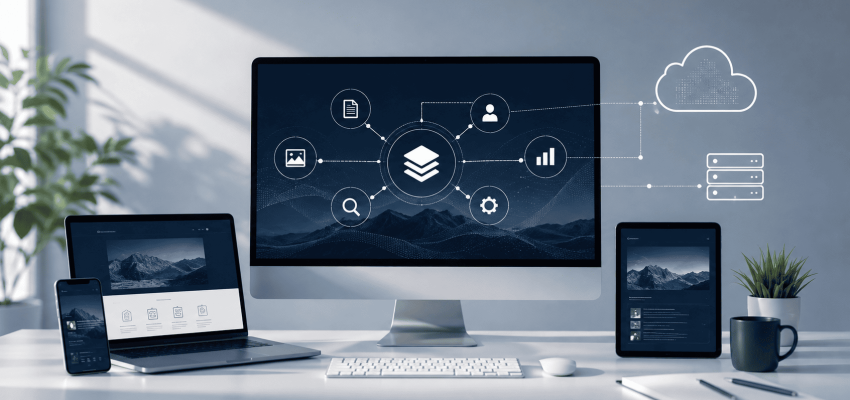
Delivering a successful digital experience on enterprise websites goes beyond having a powerful content management system. Content, user experience, personalization, performance, integration, and different digital channels need to work together seamlessly. Drupal DXP (Digital Experience Platform) combines Drupal’s flexible and powerful infrastructure with modern digital experience needs, helping organizations create more connected, scalable, and user-focused web experiences. So, what is Drupal DXP, how does it differ from the traditional CMS approach, and what advantages does it offer for enterprise web projects? In this guide, we explore the key features of Drupal DXP and the opportunities it provides for businesses in detail.
What Is Drupal DXP and Why Is It Important for Enterprise Websites?
Drupal DXP (Digital Experience Platform) is a platform approach that goes beyond managing website content, enabling users to have more integrated and personalized experiences across different digital channels. Drupal’s powerful content management capabilities, flexible architecture, and extensive integration options can be combined with marketing, analytics, personalization, and digital experience tools to create a more comprehensive digital ecosystem.
For enterprises, the fact that digital experience extends beyond a single website makes the DXP approach even more important. Managing data from websites, mobile applications, social media, customer portals, and various digital services in a consistent way strengthens users’ interactions with the brand.
The key advantages of Drupal DXP for enterprise websites include:
- Centralized content management: Different content types and digital channels can be managed through a single infrastructure.
- Personalized experiences: More relevant content and experiences can be delivered based on user behavior and preferences.
- Powerful integration capabilities: Drupal can integrate with CRMs, ERPs, marketing automation platforms, analytics tools, and third-party services.
- Scalable architecture: The system can be expanded according to increasing traffic, content volume, and evolving digital requirements.
- Multisite management: Websites created for different brands, countries, or departments can be managed through a centralized Drupal infrastructure.
- SEO and performance support: Technical SEO, structured content, caching, and performance optimization can become part of a more comprehensive digital strategy.
In this respect, Drupal DXP is not only a solution for organizations that want to publish content; it provides a powerful infrastructure approach for businesses seeking to deliver consistent, measurable, and scalable digital experiences across multiple channels.
What Are the Differences Between Drupal DXP and CMS?
Drupal CMS is a powerful content management system focused on creating, editing, publishing, and managing content. Drupal DXP, on the other hand, takes these core capabilities further through a broader digital experience approach. In addition to content management, it encompasses areas such as personalization, integration, user data, analytics, and multichannel experiences.
| Feature | Drupal CMS | Drupal DXP |
|---|---|---|
| Primary purpose | Creating and managing content | End-to-end digital experience management |
| Content management | Powerful content creation, editing, and publishing | Content management plus content experiences across different channels |
| Personalization | Can be implemented through basic features or custom development | Advanced experiences based on user data and behavior |
| Integrations | Integration through APIs and modules | Comprehensive integration with CRM, ERP, marketing, analytics, and other digital systems |
| Multichannel | Website and API-based usage | Web, mobile, applications, portals, and other digital touchpoints |
| User experience | Content-focused web experience | Personalized and integrated digital experience |
| Analytics and data | Analytics can be performed using external tools | Data and user behavior used to improve digital experiences |
| Enterprise use | Medium- and large-scale web projects | Complex, multichannel, and large-scale enterprise digital ecosystems |
In short, a CMS focuses primarily on how content is managed, while a DXP focuses on the digital experience delivered to users. Thanks to Drupal’s flexible architecture, organizations can enhance their existing CMS infrastructure with different technologies and integrations to create a more comprehensive digital experience ecosystem.
How Does Drupal DXP Improve the Enterprise Digital Experience?
In enterprise websites, users’ expectations go beyond simply providing fast and up-to-date content. Users expect a consistent experience that allows them to easily access the information they need, works seamlessly across different devices, and delivers content tailored to their needs. Drupal DXP helps meet these expectations by bringing content management and digital experience processes together.
The key features of Drupal DXP that enhance the enterprise digital experience include:
- Personalized content experience: More relevant content can be delivered based on users’ interests, behavior, or interactions.
- Consistent brand experience: A consistent user experience can be created across websites, mobile applications, customer portals, and other digital channels.
- Centralized content management: Content teams can manage content for different channels through a centralized structure.
- Powerful integration options: CRM, ERP, marketing automation, analytics, and third-party applications can be integrated with Drupal.
- Advanced search experience: Advanced search solutions can be used to help users find large amounts of content more quickly and efficiently.
- Multilingual experience: Organizations operating in different countries can manage content in multiple languages and provide experiences better suited to local users’ needs.
- Scalable structure: New content types, digital channels, and integrations can be added to the system as needed.
These features enable Drupal DXP to go beyond simply creating a website that publishes content and contribute to a more holistic digital experience that brings together user behavior, content, data, and digital channels. This approach offers a significant advantage, especially for organizations with large numbers of users, extensive content, or multiple digital touchpoints.
How Are Content, Data, and Digital Channels Managed with Drupal DXP?
In enterprise environments, managing content and data across different systems can complicate operational processes and lead to inconsistencies in the user experience. Drupal DXP helps establish connections between content management, data sources, and digital channels, creating a more centralized and organized structure.
With the Drupal DXP approach, content, data, and digital channels can be managed as follows:
- Centralized content management: News, announcements, products, services, events, and other content types can be managed through a single Drupal infrastructure.
- Structured content: Content can be structured using specific fields and content models, making it reusable across different platforms.
- API-based data sharing: Thanks to Drupal’s API capabilities, content can be delivered to mobile applications, custom frontends, digital displays, or different web applications.
- Third-party system integrations: Data exchange can be established with CRM, ERP, marketing automation, e-commerce, and analytics platforms.
- Multisite management: Websites belonging to multiple brands, countries, or departments can be managed through a shared Drupal infrastructure.
- Multilingual content management: Content in different languages can be created, translated, and updated within a centralized structure.
- User- and data-driven experiences: Data gathered from user behavior can be used to create more relevant content and digital experiences.
- Content workflows: Content creation, editing, review, and publishing processes can be managed through different user roles and approval mechanisms.
With this structure, organizations can go beyond simply publishing content on their websites and reuse the same content across different digital channels in a controlled, consistent, and reusable way. This reduces the workload of content teams while strengthening consistency across digital channels.
What Does Drupal DXP Offer in Terms of SEO, Performance, and Personalization?
Drupal DXP supports the search engine visibility of enterprise websites through its technical SEO capabilities, flexible content structure, and performance optimization features. Features such as structured content, clean URLs, meta tags, XML sitemaps, and advanced content models help SEO processes be managed more effectively. Solutions such as caching, CDN integration, and scalable architecture contribute to maintaining performance on high-traffic websites. The DXP approach also enables organizations to deliver more relevant content based on user behavior and preferences, helping create personalized experiences. This allows organizations to improve SEO, web performance, and user experience together within a single digital ecosystem.
Which Organizations and Projects Is Drupal DXP Suitable For?
Drupal DXP is suitable for organizations with extensive content and integration requirements, including enterprises, universities, government institutions, financial organizations, and multinational brands. It provides a powerful infrastructure, particularly for multilingual websites, multisite projects, customer portals, and high-traffic digital platforms.
In short, Drupal DXP combines content management with digital experience, data, and multiple channels, helping organizations build more scalable, personalized, and user-focused digital platforms.