

What Is QA? What Do Quality Assurance Specialists Do and How Do They Ensure Software Quality?
The key to delivering a successful user experience and minimizing errors in software projects lies in a strong quality assurance process. This is where QA (Quality Assurance) comes into play.

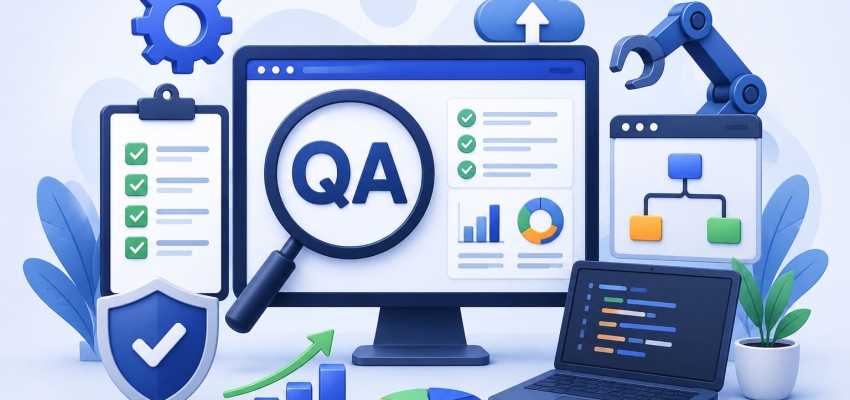
Delivering a successful user experience and minimizing errors in software projects requires a strong quality assurance process. This is where QA (Quality Assurance) comes into play. QA is a comprehensive process that ensures software is not only functional but also reliable, high-performing, user-friendly, and capable of meeting user expectations.
Today, companies place greater importance than ever on QA teams to improve the quality of their digital products and maintain customer satisfaction. But what exactly is QA? What are the responsibilities of QA specialists, what criteria do they use to test software, and which methods help ensure software quality? In this guide, we'll explore Quality Assurance processes, testing methodologies, and the critical role QA specialists play throughout the software development lifecycle.
What Does a QA Specialist Do? Testing Criteria and Processes That Define Software Quality
QA (Quality Assurance) specialists are responsible for maintaining product quality at every stage of the software development process and identifying potential issues before they reach the end user. The goal is not only to find bugs but also to ensure that the product is developed in accordance with defined quality standards. For this reason, QA specialists work closely with developers, product managers, and design teams.
The core responsibilities of a QA specialist include:
- Reviewing requirement and analysis documents to define testable criteria
- Verifying that the software functions according to business requirements
- Preparing test scenarios and test plans
- Performing manual or automated tests to detect potential defects
- Reporting identified issues and tracking their resolution process
- Evaluating whether the software meets expectations in terms of performance, security, and usability
- Conducting regression testing after new releases and updates
- Providing process improvement suggestions to enhance overall product quality
In QA processes, not only the presence of bugs but also the overall user experience of the software is evaluated. Therefore, quality assurance activities cover a wide range of criteria such as functionality, performance, security, compatibility, and accessibility. An effective QA process enables software teams to build more reliable products and deliver a smoother experience to end users.
What Criteria Do QA Teams Use to Test Software?
For software to be considered high quality, it is not enough for it to function without errors. QA teams evaluate many different criteria, ranging from functionality and security to performance and user experience. In this way, they determine whether the software meets both technical requirements and user expectations.
| Test Criterion | Description |
| Functionality | Checks whether the software correctly performs the expected features. |
| Performance | Evaluates the application’s speed, load-handling capacity, and resource usage. |
| Security | Tests the level of protection against unauthorized access, data breaches, and security vulnerabilities. |
| Usability | Examines whether the interface is user-friendly and whether users can easily complete tasks. |
| Compatibility | Checks whether the software runs smoothly across different devices, operating systems, and browsers. |
| Accessibility | Assesses compliance with accessibility standards to ensure users with disabilities can use the product comfortably. |
| Reliability | Tests whether the software performs consistently and stably during long-term use. |
| Scalability | Analyzes how system performance is affected under increasing user or data load. |
What Are QA Test Types? Differences Between Manual and Automated Testing
QA testing methods used in QA processes aim to evaluate software quality from different perspectives. Generally, tests are divided into two main categories: manual testing and automated testing. Each approach has its own advantages and can be used together depending on the needs of the project. The right testing strategy increases development efficiency and helps detect software defects at an early stage.
| Criterion | Manual Testing | Automated Testing |
| Application Method | Performed manually by a tester. | Test cases are executed automatically via tools and scripts. |
| Setup Process | Can be started quickly. | Requires time for initial setup and development. |
| Repetitive Tests | Must be performed from scratch each time. | Can be run with a single click or scheduled automatically. |
| Bug Detection | Effective for usability and visual checks. | Provides high accuracy for repetitive and large-scale testing. |
| Cost | Lower short-term cost. | Saves time and resources in the long run. |
| Use Cases | Exploratory testing, usability testing, and new feature validation. | Regression testing, performance testing, and frequently repeated scenarios. |
What Are the Testing Tools and Technologies Used in the QA Process?
QA teams use various tools and technologies to make testing processes faster, more efficient, and more consistent. These tools serve different needs, from bug tracking and test automation to API testing and performance analysis. While the tools used may vary depending on the scope of the project and testing requirements, some technologies have become industry standards.
The commonly used QA tools and technologies include:
- Selenium: One of the most popular tools for creating and running automated tests for web applications.
- Cypress: A fast and developer-friendly test automation tool designed for modern web applications.
- Playwright: An open-source testing tool that supports multiple browsers and enables advanced automation scenarios.
- Postman: Used for API testing, sending requests, and verifying that services function correctly.
- JIRA: A widely used platform for bug tracking, task management, and coordinating project workflows.
- TestRail: A test management tool used for planning, managing, and reporting test cases.
- JMeter: Helps analyze system behavior under heavy traffic through performance and load testing.
- Git and GitHub: Used for version control of test code and improving team collaboration.
- Jenkins: An automation server that runs automated tests within continuous integration (CI/CD) pipelines.
- Docker: Helps standardize test environments and ensures consistent results across different systems.
Thanks to these tools, QA teams can manage testing processes more effectively, detect issues faster, and continuously improve software quality. With the rise of automation technologies, testing has become more comprehensive and efficient.
What Are the Differences Between QA and Quality Control (QC)?
QA (Quality Assurance) and QC (Quality Control) are two important concepts aimed at improving software quality. Although they may seem similar, they differ in focus and approach. QA focuses on preventing defects by making quality an integral part of the development process, while QC focuses on identifying existing defects by inspecting the final product.
The key differences between QA and QC can be summarized as follows:
- QA is process-oriented, while QC is product-oriented. QA improves development processes, whereas QC evaluates the quality of the final product.
- QA takes a preventive approach, aiming to prevent potential issues before they occur.
- QC takes a detective approach, focusing on identifying existing errors and defects in the software.
- QA covers the entire software development lifecycle, from planning to product delivery.
- QC is mainly concentrated in testing and verification phases, checking whether the product meets requirements.
- QA contributes to defining quality standards and ensures more efficient and consistent processes.
- QC verifies compliance with quality standards and checks whether the product meets defined criteria.
In a software project, using only QA or only QC is not sufficient. An effective quality management approach requires both. QA ensures that processes are properly followed, while QC verifies that the final product meets quality expectations. Together, they help deliver a more reliable, high-performing, and error-free user experience.
What Are the Advantages of Using QA in Software Projects?
Implementing quality assurance processes in software projects not only reduces bugs but also contributes to a more efficient development process and improved user satisfaction. In today’s highly competitive digital world, QA has become an essential part of many companies aiming to deliver high-quality and reliable products.
The main advantages of using QA in software projects are as follows:
- Detects software defects at an early stage.
- Improves product quality and helps develop more reliable applications.
- Prevents costly issues that may arise during the development process.
- Enhances user experience and increases customer satisfaction.
- Ensures that the software meets performance, security, and usability standards.
- Supports smoother releases of new versions and updates.
- Strengthens communication and process management between teams.
- Reduces potential issues in maintenance and support processes.
- Contributes to protecting brand reputation and increasing user trust.
- Improves overall project efficiency by saving time and resources in the long term.
An effective QA process ensures that software not only meets technical requirements but also aligns with end-user expectations. Therefore, quality assurance plays a critical role in achieving sustainable success in modern software development.
Why Is QA an Essential Part of Modern Software Development?
In today’s increasingly complex software projects, it is no longer sufficient to check quality only at the end of the development process. QA (Quality Assurance) integrates quality into every stage of a project, enabling early detection of defects, continuous process improvement, and alignment with user expectations. This approach helps development teams work more efficiently while ensuring end users receive a more reliable product experience.
QA specialists play a critical role in the success of software projects by planning testing processes, enforcing quality standards, and identifying potential risks in advance. Through comprehensive quality practices that include manual and automated testing as well as performance and security checks, products become more stable, secure, and sustainable.
In short, QA is not just a defect-finding process but a strategic approach aimed at continuously improving software quality. In a highly competitive digital landscape, QA remains an indispensable part of modern software development for companies that aim to build successful, user-focused products.